By Ali Syarief
Cross Culture Institute
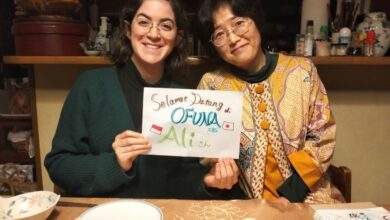
This morning, I had an interesting discussion with Dr. Nunuk Andriani Sensei about a seemingly simple yet culturally profound topic: Sensei.
The word Sensei (先生) is commonly translated into English as “teacher.” However, this translation does not fully capture its cultural meaning. In Japanese society, Sensei is not exclusively a designation for schoolteachers or university lecturers. Doctors, lawyers, politicians, traditional artists, martial arts masters, and other professionals may also be addressed as Sensei.
This suggests that Sensei is more than an occupational title. It is also an expression of social recognition and respect toward someone whose knowledge, expertise, experience, or professional contribution is valued by others.
Our conversation led me to reflect on how different cultures understand teachers, knowledge, respect, authority, and the relationship between those who teach and those who learn. From a cross-cultural perspective, the Japanese concept of Sensei offers an interesting way to understand not only education but also human relationships and lifelong learning.
The Cultural Meaning of Sensei
The Japanese characters forming the word Sensei are 先 (sen), meaning before or earlier, and 生 (sei), meaning birth or life. Although this linguistic composition should not be interpreted as a complete definition of the concept, it offers an interesting philosophical association: someone who has walked a path before us and may therefore guide those who follow.
In this sense, a Sensei is not necessarily someone who knows everything. Rather, a Sensei is someone who has acquired knowledge and experience in a particular field and is recognized as a person from whom others can learn.
There is also an important distinction between formal authority and earned respect. A person may hold an academic position, possess a doctoral degree, or occupy a senior institutional role. However, these credentials alone do not necessarily make that person an inspiring Sensei.
Respect, in its deeper sense, is not simply demanded because of one’s position. It is cultivated through knowledge, integrity, experience, humility, and the way one treats other people.
Sensei and the Japanese Social Structure
Japanese society has a strong cultural awareness of relationships, social positions, and mutual obligations. One example is the Senpai–Kohai relationship, which distinguishes between senior and junior members within an institution, organization, or community.
While Senpai refers to someone with greater seniority or experience in a particular environment, Kohai refers to someone who comes later. Sensei, however, represents a different dimension: the relationship between a person recognized for knowledge or expertise and those who learn from that person.
These concepts should not be confused. A Senpai is not automatically a Sensei, and a Sensei does not necessarily have to be the oldest person in the room.
This distinction is important in cross-cultural communication because societies do not always organize respect and authority in the same way.
A Cross-Cultural Perspective: Is a Teacher Always a Sensei?
In Indonesian culture, the concept of a teacher is often associated with the word guru. Traditionally, a guru is not merely someone who transfers knowledge but also someone expected to guide, educate, and provide moral direction.
The expression guru digugu lan ditiru in Javanese culture illustrates this expectation: a teacher’s words are worthy of consideration, and their behavior may serve as an example.
There are interesting similarities between this understanding and the traditional expectations associated with a Japanese Sensei.
However, the cultural emphasis may differ.
Japanese society tends to place considerable importance on social relationships, respect for experience, discipline, and the recognition of expertise. Indonesian society, with its diverse ethnic and cultural traditions, may place greater emphasis in certain contexts on personal closeness, moral guidance, religious values, and the teacher’s social role.
These are broad cultural tendencies, not absolute characteristics of either society.
The important lesson is that the same word, “teacher,” can represent different expectations depending on the cultural environment.
Beyond Formal Education: Everyone Can Become a Teacher
One of the most interesting ideas emerging from this discussion is that learning does not necessarily take place in classrooms, universities, or formal educational institutions.
We learn from people we meet, cultures we encounter, conversations we have, and experiences we share.
A farmer may teach us about patience and the relationship between humans and nature. An artist may teach us about creativity and cultural identity. A craftsman may demonstrate the value of discipline and attention to detail. A person from another country may teach us to reconsider assumptions that we have taken for granted throughout our lives.
They may not possess academic titles, but their experiences can provide valuable lessons.
For this reason, I find it useful to introduce the expression “Life Sensei.”
This is not an official Japanese title, but a cross-cultural expression that describes people who become teachers through their experiences, wisdom, attitudes, and contributions to the lives of others.
A Life Sensei does not necessarily stand in front of a classroom. Sometimes, such a person simply shares a conversation, demonstrates kindness, challenges our assumptions, or introduces us to a different way of seeing the world.
Cross-Cultural Learning: From Hierarchy to Mutual Understanding
My experience in cross-cultural activities has taught me that genuine learning is not a one-way process.
When Indonesians interact with Japanese people, for example, they do not simply learn Japanese language, etiquette, or traditions. Japanese participants also have opportunities to understand Indonesian perspectives, values, and ways of life.
Both sides become learners and teachers at the same time.
This is particularly relevant to the philosophy of Cross Culture Institute and the international exchange activities associated with Hippo Family Club.
Language learning, homestay experiences, cultural exchanges, and personal friendships demonstrate that education can happen through human interaction rather than conventional instruction alone.
In such an environment, the distinction between teacher and student becomes more flexible. A person who teaches us today may become our student tomorrow. A person who appears to know less about one subject may possess extraordinary wisdom in another.
This is why cultural humility is essential.
We should not approach another culture with the assumption that we already know everything. Instead, we should approach it with curiosity, respect, and a willingness to learn.
The True Meaning of Respect
Perhaps the most important question is this: Should someone be respected because they are called Sensei, or should they be called Sensei because they have earned respect?
From a cross-cultural perspective, I believe the distinction matters.
Titles and social conventions help maintain order and express courtesy. They have an important place in Japanese society and in many other cultures.
However, genuine respect should go beyond formal titles.
A person may be addressed as Sensei, Professor, Doctor, or Guru, but the deeper value of that person lies in their contribution to knowledge, society, and the development of others.
Likewise, those who learn should not merely become followers. They should develop the ability to think independently, question constructively, and eventually contribute their own knowledge and experience.
A good teacher does not create permanent dependence. A good teacher encourages others to become independent thinkers.
Conclusion: A Sensei Is Also a Lifelong Learner
My discussion with Dr. Nunuk Andriani Sensei this morning reminded me that a seemingly simple cultural term can open a much wider conversation about education, social relationships, and the meaning of human development.
The Japanese concept of Sensei offers us an opportunity to reconsider how we recognize knowledge and respect people who contribute to our learning.
Ultimately, I believe that being a Sensei is not simply about occupying a position above others. It is about having something meaningful to share and being willing to help others grow.
More importantly, a true Sensei must also remain a lifelong learner.
Perhaps the most beautiful principle of cross-cultural learning is this:
We should never stop being students, because everyone we meet has something to teach us.
And perhaps that is the essence of a meaningful human relationship: not merely finding someone to teach us, but recognizing the possibility of learning from everyone.
In a world divided by differences, the ability to learn from one another may be one of the most important forms of wisdom.