
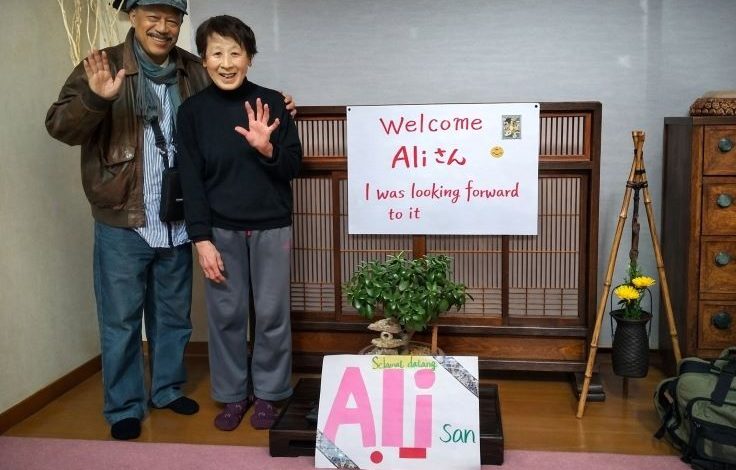

In cross-cultural contexts, the way a society receives others often reflects the values it upholds regarding human dignity. In a foreign land—shaped by a different language, culture, and historical experience—an individual is not necessarily treated as an “outsider.” Instead, they may be welcomed as a presence that is anticipated: formally received, their name acknowledged, and their arrival marked through symbolic gestures, including the display of national symbols from more than one country. Such acts are not mere protocol. They represent recognition that a person’s presence carries meaning.
This form of recognition is particularly significant in an increasingly pragmatic world, where individuals are frequently assessed based on function and utility. In contrast, cross-cultural acknowledgment of this kind affirms the intrinsic value of a person, beyond immediate interests or transactional considerations.
Honor that emerges in cross-cultural relationships often does not derive from position, authority, or material wealth. Rather, it grows out of human relations: trust built over time, shared memory, and respect shaped through consistent interaction. This type of honor cannot be purchased or manufactured. It develops gradually, grounded in personal integrity and sustained ethical conduct. Precisely because it is independent of formal status, its value becomes enduring and profound.
At this point, a notable contrast emerges. It is not uncommon for individuals to receive deeper appreciation outside their country of origin. In their own societies, recognition is often filtered through political dynamics, social rivalry, or the banal mechanics of power that reduce individuals to their affiliations. Abroad, however, evaluation tends to focus more directly on personal qualities—on who a person is, rather than whom they are associated with.
Meaningful forms of reception also carry symbolic weight. They indicate that an individual arrives not merely as a visitor, but as a bearer of stories, values, and lived experience. In this sense, the individual functions as a bridge—connecting nations, cultures, and historical narratives. Their presence enriches spaces of encounter and contributes to a broader understanding grounded in mutual respect.
From this perspective, an essential lesson in cross-cultural relations can be drawn: the highest form of honor is not found in public acclaim or collective praise, but in being remembered sincerely by others—especially in places where there is no social obligation to do so. When such recognition occurs across cultures, its meaning is amplified because it arises from freedom, sincerity, and a genuine respect for shared humanity.


