On what seemed like an ordinary morning in March 2026, nature in Japan delivered a message that was anything but ordinary. Cherry blossoms—symbols of impermanence, beauty, and renewal—bloomed earlier than expected. The cities of Kofu, Gifu, and Kochi became the first witnesses, as if competing to welcome a season that is always anticipated, yet this time arrived in haste.
In Kofu, the bloom marked the earliest since records began in 1953. This was not merely a statistic, but a sign of shifting times—nine days earlier than last year and ten days ahead of the average. Nature seemed to be accelerating, moving forward without waiting for humans to fully comprehend its rhythm.
A similar pattern unfolded in Gifu and Kochi. In Kochi, for the third consecutive year, the cherry blossoms appeared first in the country. At around 10 a.m., the specimen tree at Kochi Castle showed more than five blossoms—the threshold for officially declaring the flowering season open. A quiet announcement, yet deeply symbolic: spring had begun.
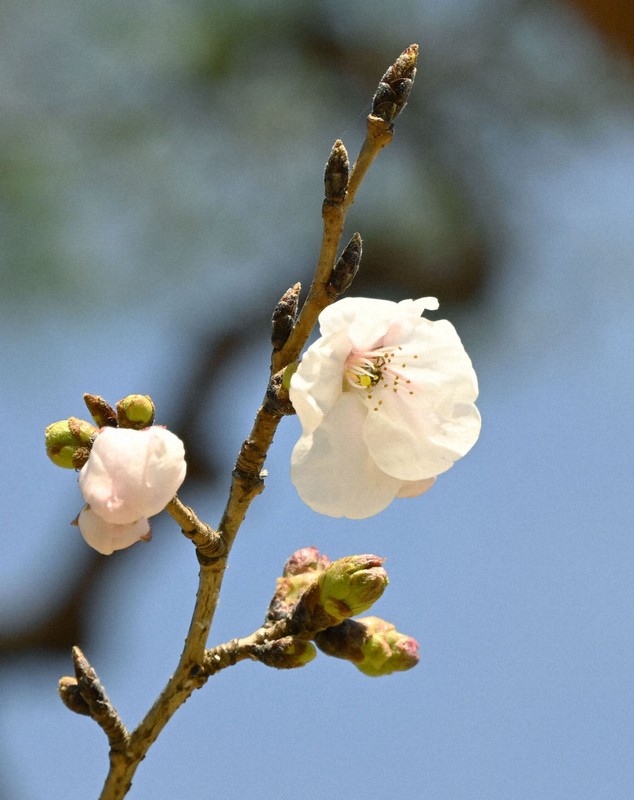
Scientifically, the explanation may seem straightforward: low rainfall, extended hours of sunshine, and warmer-than-usual temperatures. But for people—especially within Japanese culture—sakura is never just a flower. It is a metaphor for life itself: beautiful, fleeting, and never experienced the same way twice.
When cherry blossoms bloom too early, a subtle dissonance emerges between nature’s rhythm and human expectation. Festivals are not fully prepared, schedules remain unadjusted, and even longing feels prematurely summoned. It is as if time itself has grown impatient.
Yet, amid this shift, there remains a genuine joy. A high school student, Koyumi Hamada, expressed her simple wish to enjoy hanami with her friends. In her words lies the essence of it all: no matter how nature changes, humans will always seek moments of togetherness.
And therein lies the paradox.
Climate change—or at least climatic anomalies—is often understood through numbers, graphs, and scientific reports. But its impact is felt in far subtler ways: in the timing of blossoms, in the sense of urgency to appreciate beauty that was meant to unfold gradually.
Sakura has long taught us that beauty is impermanent. Now, it also reminds us that even impermanence itself is changing form.
Faster. Less predictable. Harder to grasp.
Perhaps, in the end, what is shifting is not only the season—but the way humans understand time itself.