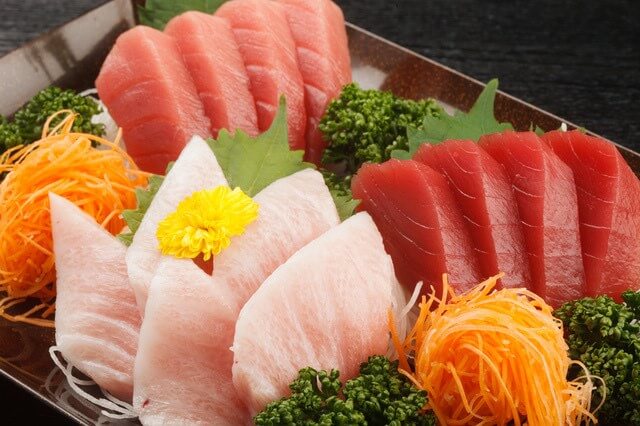

“The true flavor of sashimi lies not in the fish itself, but in the mind that has learned to see beyond first impressions.”
Inspired by the Japanese philosophy of simplicity, respect, and mindful perception.
By Ali Syarief
It emerged in Tanjung Harapan, a small riverside village on the edge of Tanjung Puting National Park in Central Kalimantan, Indonesia. Surrounded by ancient rainforest, where orangutans still swing freely among towering trees and the rhythm of nature remains largely untouched by modern life, I found myself engaged in a conversation that would shape the central idea of this book.
Sitting with me were two Japanese friends: Mr. Kenshi Suzuki, CEO of Hippo Family Club, and Mr. Aoyama, an environmental expert who had worked with JICA. We had spent the day exploring one of the world’s richest tropical ecosystems, observing orangutans in their natural habitat. As evening fell beside the Sekonyer River, our conversation shifted from conservation and culture to something much deeper—the nature of human perception.
I shared with them an idea that had been growing in my mind for years.
“I am writing a book called The Sashimi Concept.”
They looked at me with curiosity.
“A book about Japanese cuisine?” Mr. Suzuki asked.
I smiled.
“No,” I replied. “It is a book about how the human mind creates reality.”
I explained that what fascinated me was never the sashimi itself.
What fascinated me was its transformation.
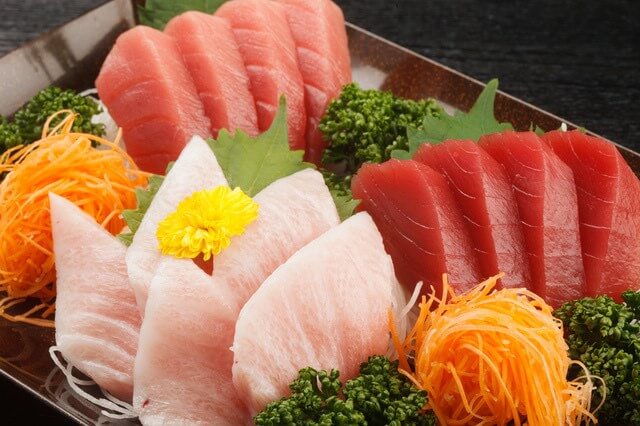
Centuries ago, sashimi was simply raw fish.
Today, the very same raw fish is admired as culinary art, served in prestigious restaurants, celebrated by master chefs, and regarded as one of the finest expressions of Japanese culture.
The object has never changed.
It is still fish.
It is still raw.
The proteins remain identical.
The nutrients remain identical.
Only one thing has changed.
Human perception.
Mr. Suzuki listened quietly before saying something I have never forgotten.
“Then your book is not about sashimi.”
He paused.
“It is about how people assign meaning.”
That single sentence became the foundation of everything that follows.
Modern neuroscience suggests that our brains never experience reality directly. Instead, they continuously interpret, predict, compare, and assign meaning to the information received through our senses. In other words, we do not merely see the world—we construct it.
That is why one person sees danger where another sees opportunity.
One sees failure where another discovers a lesson.
One sees ordinary raw fish.
Another sees elegance.
The object remains unchanged.
The meaning changes.
And once meaning changes, emotions change.
Choices change.
Behavior changes.
Eventually, history changes.
The more I reflected upon sashimi, the more I realized that civilization itself is built upon this invisible process.
Money is paper.
Gold is a metal.
Diamonds are carbon.
Titles are words.
Flags are pieces of cloth.
Yet humanity has transformed them into symbols of extraordinary value because perception gives them power.
Perhaps sashimi is one of the simplest demonstrations of the greatest truth about the human mind.
Reality rarely changes as quickly as perception does.
And when perception changes, an entirely new world appears—even though nothing in the physical world has changed at all.
This book is an invitation to explore that invisible transformation.
Not through the story of raw fish.
But through the remarkable story of the human mind.